Academic Affairs Resources

Faculty Resources
General Faculty Resources
Registrar and Academic Success
The UNC Asheville Catalog gives faculty responsibility for taking disciplinary action for academic dishonesty committed in their own classes; students have the right to appeal those actions through the Faculty Conciliator and Academic Appeals Board process.
If you take disciplinary action for a case of academic dishonesty in your classes, please notify the student in writing, then submit a record of your action using the Academic Integrity form.
The Academic Success Center (ASC) takes no additional action if the incident is a student’s first reported case. If ASC has documented multiple incidents, additional disciplinary action can be sanctioned by the Provost’s Office.
Human Resources
The Office of Human Resources is the point of contact for inquiries about medical and dental coverage, full retirement, tuition programs and disability for all faculty and staff. Questions regarding the Phased Retirement Program for faculty should be directed to AA Personnel Specialist in Academic Affairs at aa_personnel@unca.edu.
Public Safety
UNC Asheville Public Safety provides emergency response, assistance with personal threats, security escorts, lost and found, parking and transportation services, and assistance with law enforcement.
In an emergency, dial 911 or contact University Police at 828-232-5000
Office of Academic Accessibility
You can contact the Office of Academic Accessibility directly or students can complete and online student application here. Academic Accessibility also assists with accessibility for events and course materials.
For pregnancy-related accommodations, please contact the Title IX Coordinator (see Gender-based misconduct involving students, below, for contact information).
Human Resources and IX Coordinator
UNC Asheville prohibits all forms of discrimination and discriminatory harassment based on race, sex, age, disability, national origin, sexual orientation, gender and other protected categories. All policies are on HR’s website.
UNC Asheville employees cannot have any instructional, research, administrative or other responsibility or authority over an enrolled student with whom she or he has an amorous relationship or to whom he or she is related by blood, law or marriage.
Faculty, research officer and staff responsibilities:
All have a duty to report discrimination, harassment and related misconduct toward students to Title IX. (For gender-based misconduct involving students, see below.)
The University asks all faculty, research officers and staff to report prohibited conduct involving employees or third parties to Human Resources or Title IX.
All who have supervisory responsibility are required to report prohibited conduct involving anyone at UNCA to HR, and are responsible for acting to prevent discrimination and harassment, including responding promptly and thoroughly to these types of claims.
Title IX Office
Inform the student that you have a responsibility to report what they’ve shared Title IX Office; the Title IX Coordinator will contact the student with resources and information. It is the student’s choice whether to participate in an investigation, if one occurs. Provide information about UNC Asheville’s resources from the Title IX website.
Registrar and Title IX
Students can register their affirmed (preferred) names, which will appear on course rosters.
Internal Audit Office
The University’s Internal Audit Office is a confidential channel, by phone and web-based, for employees to report or seek guidance on possible compliance and fraud issues. It includes an option to report concerns anonymously.
Study Abroad Office and Office of Academic Affairs Personnel Specialist
International students and visiting professors and researchers should contact the Study Abroad Office for assistance.
The Office of Academic Affairs Personnel Specialist is the go-to resource for international full-time faculty.
Center for Teaching and Learning
The Center for Teaching and Learning offers resources, workshops and individualized consultation.
Student Well-Being
You can speak with the student, a student affairs administrator, or consult directly with student Health & Counseling Center.
Behavioral red flags may include repeatedly missing class, frequently being unprepared, and a noticeable decline in participation.
- Student Health & Counseling Center (Monday – Friday 8:00am – 4:30pm)
- Crisis Services – Bulldog HealthLink, 888.267.3675
Faculty & Staff Well-Being
The Faculty and Staff Assistance Program, offered through ComPsych are available 24
hours a day, 7 days a week with free and confidential assistance.
- Faculty & Staff Employee Assistance Program (EAP), 833.515.0768, Company ID: UNCAEAP
Ombuds
The University Ombuds Office is a confidential place for faculty and students to discuss workplace and academic concerns, policies and procedures and many other issues. Ombuds serve faculty and students and are not part of any formal University process.
Student Ombuds
Faculty Ombuds
- Laura Jones, ljones3@unca.edu, 828.251.6123
Remote Course Policy
UNC Asheville’s success is based on the in-person instruction that provides high quality faculty and student engagement. In certain circumstances, courses that are offered fully remote may also promote student success. Instructors who demonstrate effectiveness at remote instruction based on annual evaluations may be eligible to occasionally teach a remote section of a multi-section course that is offered in-person. Additional courses being taught remotely are subject to approval by Academic Affairs.
Administrators should utilize the following guidelines to ensure equity and student-centeredness for fully remote courses.
- Remote courses allocated to faculty should be distributed equitably and be limited to one course per instructor per semester.
- Remote courses allocated to faculty should meet synchronously. Asynchronous courses must be submitted for approval a month in advance of the schedule, must indicate how instructional hours are equivalent to an in person course; and include all of the following:
- Remote courses allocated to faculty should list and assess remote-specific learning outcomes.
- Remote courses allocated to faculty should include questions about the effectiveness of remote delivery on the SFIs.
- Remote courses allocated to faculty should be approved by the unit and division head upon submission of the draft schedule.
Additional guidelines
- The modality of courses may not be changed from the schedule without approval from the Dean.
- No more than 20% of a department’s curriculum can be offered remotely.
- Hybrid is defined as at least 50% in person.
- Individual instructors may utilize remote instruction during the semester, that may include up to 20% of their meetings remotely. Clear communication to students, the chair, and the dean is required.
All exceptions to these provisions must be pre-approved by the unit Dean and Provost.
Leadership in each UNC Asheville division is responsible for determining which types of flexibility may be appropriate based on operational need, specific position requirements, and employee performance. Decisions regarding flexible work arrangements are at the discretion of leadership. This policy does not create a guarantee, right, or entitlement to any specific flexible work arrangement for any employee.
For further reference: Policy 309
Office of Research and Sponsored Programs
The University defines research misconduct, in accordance with federal policy, as any fabrication, falsification or plagiarism in proposing, performing or reviewing research or in the reporting of research results.
The Office of Research and Sponsored Programs is the place to go for concerns or questions, including hypothetical situations.
- Office of Research and Sponsored Programs, 828.251.6476 Monday – Friday 8:00am – 4:30pm
Student Health & Counseling After Hours Contacts
- Medical Emergency – Contact MAHEC at 828-257-4740
- Crisis Services – Bulldog HealthLink at 888-267-3675
Faculty & Staff Employee Assistance Program (EAP)
- Guidance Resources Online at 833-515-0768, Company ID: UNCAEAP
Veteran Services
The Office of the Registrar handles resources, policies and procedures for veterans of the U.S. Armed Forces.
Transition Programs
Faculty Development Resources
Developing Courses and Course Activities
Academic Affairs endeavors to make funds available for activities that enhance learning in a course or for projects to develop new courses or curricular elements. Please complete the funding request form or contact your academic dean for details.
Faculty interested in adding service learning to their classes can find information at the website for the Key Center for Community Engaged Learning.
Faculty Development Opportunities
Academic department/program budgets include a travel allotment for each full-time faculty member. Chairs and program directors may exercise discretion in the actual allocation of dollars. Academic Affairs encourages departments/programs to work in a collaborative way to maximize effective use of these funds.
Academic Affairs strives to provide support and funding for faculty to engage in scholarship and creative activities although the available funding changes yearly. Please contact your academic dean for more information about requesting funding for scholarship and creative activity. The Faculty Development Funding Request is available on the forms page.
Faculty may request Professional Development Leave to pursue a significant piece of scholarship or creative work. Applications typically are due early in fall semester of the year preceding the planned leave year. For more information, please see Section 4.1.4 of the Faculty Handbook, and contact your academic dean.
Faculty may participate in a variety of development activities through the Center. For information on current opportunities, visit the Center for Teaching and Learning website.
The URC is charged with encouraging and facilitating faculty participation in research and creative activity. URC administers the annual Intramural Faculty Research Program funded by the UNC Asheville Foundation. Contact the committee chair for more information.
The UTC is charged with encouraging and facilitating improvements in teaching. Annual activities vary. Contact the committee chair for more information.
Funds for Class and Group Travel
Faculty seeking funds for service learning activities should apply to the Key Center for Community Citizenship and Service Learning.
- Funding is available to faculty to support class or group travel for academic or instructional purposes. Requests should clearly articulate the connection of the activity to course content, course objectives and/or learning outcomes. Requests that include plans to offer student presentations, displays or other products to the campus community are strongly encouraged, as they maximize the impact of the experience (e.g., poster presentations to department student clubs, exhibits for display at campus venues, etc.).
- Class or Group Travel requests are limited to $750. Additional funding may be authorized to cover faculty expenses. Faculty must complete the Curricular Enhancement Form including the itemized budget page.
- Students are expected to make a contribution to their travel costs. The minimum student contribution for any student travel opportunity is $5 or 20% of the total per person cost, whichever is larger. Scholarship funds may be available for students with documented economic need (contact the Financial Aid Office).
- Academic departments, programs, and/or relevant student groups associated with the travel request are required to provide funds in support of the travel opportunity. Departments or programs with budgets to support required student travel may elect to waive the required student contribution.
Using State Funds for Student Travel
From the Office of State Budget:
- If student travel is directly related to their curriculum, then YES, you may use state funds.
- If the student is classified as an employee of the university (work-study or otherwise) then YES, you may use state funds.
- If travel is solely for professional associations, such as attending conferences/workshops, then NO, you may not use state funds.
If you are requesting travel reimbursement for students using state funds, please attach documentation signed by the department chair and the Provost stating that the trip falls into one of the first two categories.
Important Links
Faculty Evaluation
At UNC Asheville, all full-time continuing faculty participate in an annual evaluation process that is designed to provide both a summative evaluation of each faculty member’s performance in teaching, scholarship/creative activity, and service and formative suggestions for improvement in these areas.
Annual evaluation begins with the completion of the Faculty Record Form which is completed in Watermark Faculty Success. Additional resources:
- A slide deck which provides a guide to Watermark.
- A Google Doc with tips and pointers.
- 2025-26 Committee of Tenured Faculty (CTF) Presentation PowerPoint – Timeline & Pertinent Information
- Fall 2025 Partial-Year Annual Faculty Record form – UPDATE: We will not be using the Fall 2025 Partial-Year Annual Faculty Record form previously located here. You will need to use Watermark to generate your partial-year faculty record reporting your activities or the year so far. In Watermark, under Reports, go to Annual Faculty Record. Set the start date to May 15, 2025 and the end date for the date you are running the report. Look it over for accuracy, save a copy, and upload into the Google Form with your other materials.
- 2025-26 Post-Tenure Review Timeline & Pertinent Information
- Click here to access the PTR Committee Training Module – Optional
Faculty Funding Opportunities
UNC Asheville funds faculty for projects and activities. To learn more, please see the following opportunities. Links are provided to the appropriate contacts and, if publicly posted, the application.
Funding limit: $400
Applications accepted at any time, but the budget is typically exhausted by March.
CTL awards support on-campus faculty development (e.g., honoraria or travel for guest speakers for workshops/presentations for faculty).
Funding limit: $350
If funding is for a field trip, additional funds may be authorized to cover faculty expenses. Calls for Applications occur once in the Fall semester and once in the Spring semester.
Curricular enhancement awards support activities or projects that enhance student learning in specific courses or program/curricular areas.
Funding limit: $500
The Faculty Development Fund supports faculty professional activity. The supported projects and activities are intended for special opportunities of unusual benefit to the university rather than ordinary faculty travel to conferences. Calls for Applications occur once in the Fall semester and once in the Spring semester.
Awards vary
The endowed professorships also include resources for supporting other faculty as appropriate. If you believe your project falls within the purview of the professorship, as described in the following linked page, feel free to contact them.
Funding limit varies (see information)
Applications accepted at any time.
The Humanities Program supports Humanities faculty development, Humanities Program projects, Humanities speakers and programming, research focused on Humanities
Key Center Faculty Fellows receive up to $1500 to support their projects
Key Center goals are to increase the quantity and quality of service learning designated courses, develop faculty leadership, advance institutional change related to community-engaged learning and teaching.
$1000 stipend for faculty advisors, $1000 for the community partner organization, and students also are paid for their research hours
The McCullough Fellowship Program allows students to gain practical skills through applied research projects in such areas as data analytics and mapping, environmental and administrative law, application of new technologies, and the preservation of critical ecosystems. McCullough Fellows collaborate with faculty members and community-based businesses and organizations to address areas of critical need in our local area.
Awards vary, ranged from $1500-$2000
Applications for funding due early October.
The Mills Distinguished Lecture Funds support visiting distinguished lecturers in the Humanities. (Available only to faculty in Classics, History, Modern Languages, Philosophy, and Religious Studies.)
Awards vary
Applications for funding due early October.
The Mills Faculty Research and Development Award funds faculty research in Humanities, including conference travel expenses, books and supplies, or other professional development expenses. (Available only to faculty in Classics, Foreign Languages, History, Literature and Language, Philosophy, and Religious Studies.)
Funding limit: $450
Applications are accepted on a rolling basis.
PREP funds up to 11 faculty or staff members to attend training opportunities—such as workshops, conferences, and seminars on grant seeking, grant writing, community/partner engagement, project development, etc. (Note: Faculty/staff must provide the first $50 of the training from their departmental professional development funds, and PREP funds will reimburse the remaining amount, up to $450. For training costs that exceed $500, the faculty/staff member will pay the excess amount from their personal funds.)
Funding limit: $1500
Please contact the URC Committee for application and deadline information.
The URC funds faculty scholarly and creative projects for upcoming year (e.g., materials/equipment, travel, student research stipends).
Funding range: $250-$1000
Please contact the USC Committee for application and deadline information.
USC funds faculty engaging in service projects with students. Projects should clearly demonstrate a student learning experience in combination with service to the community.
Funding limit: $500
Please contact the UTC Committee for application and deadline information.
UTC funds professional development in teaching or pedagogical innovation (e.g., attendance at pedagogy workshops, course redesign, incorporation of peer mentors, course assessment).
Forms & Guidelines
This section includes relevant policies and resources available to support faculty work. Members of the faculty should contact their dean if they have questions about any of these policies or opportunities.
Introduction to Self-Service Banner with Instructions (updated July 2016)
- Adjunct Request Form
- Faculty Position Request Form
- Ad Templates – Request form from Provost Office
- Initiate Search Request Forms – Request form from Provost Office
- Faculty Workload Policy
- Link to Watermark Faculty Success
- Watermark Tips and Pointers
- Guide to Watermark
- Family Educational Rights and Privacy Act (FERPA) The Family Educational Rights and Privacy Act (FERPA) (20 U.S.C. § 1232g; 34 CFR Part 99) is a Federal law that protects the privacy of student education records. FERPA gives parents certain rights with respect to their children’s education records. These rights transfer to the student when he or she reaches the age of 18 or attends a school beyond the high school level. Students to whom the rights have transferred are “eligible students.”
- FERPA Release of Information Form
- Academic Off-Campus Activities Safety Program and Field Trip Forms – please visit this page, created by the Environmental Health & Safety (EH&S) Officer, which includes a Participant Form, Risk Assessment Form, and Medical Authorization Form along with important information, such as academic off-campus activity requirements, risk assessment, and reporting incidents.
- Policy on Adverse Weather
- Faculty Handbook 3.1.4.3.4 – Policy on Absence from Class
Faculty Recruiting and Hiring
- After discussing the need for an adjunct faculty member with their Dean, the chair/program director should complete the Adjunct Request Form and submit it for evaluation by Academic Affairs. If the department does not already have an open posting for adjunct instructors in PeopleAdmin, it should submit the Request to Create an Adjunct Faculty Posting to the Office of the Deans. Interested candidates may submit applications through that posting.
- After receiving approval for the adjunct position, the chair/program director should identify the person to be hired (either an adjunct previously hired or a new adjunct from the PeopleAdmin posting), ensuring that that individual is qualified and credentialed to teach courses for college credit (an appropriate graduate degree OR at least 18 hours of graduate credit in the appropriate area OR experience that the chair can describe in a compelling way to justify the hire).
- The chair/program director should request transcripts (both graduate and undergraduate) and a C.V. from the candidate to evaluate academic qualifications, unless these materials are already on file, and send these materials to the Dean for hiring approval.
- Academic Affairs will carry out a background check and then issue a formal contract to the adjunct instructor.
- Signed contracts should be returned to the Office of the Deans. Individuals who are being hired for the first time or hired again after an extended absence should arrange to meet with the Administrative Assistant in the Office of the Deans to complete the paperwork necessary for employment. To that end, they will need to bring a valid driver’s license, a social security card or valid passport, and a voided blank check for establishing direct deposit of pay.
This section applies to both new positions and to the offering of new contracts to non-tenure-track (NTT) faculty members whose contracts have expired.
- The department chair/program director should discuss the proposed position request with their Dean to understand this request in the context of institutional priorities and initiatives. This includes the offering of a new contract to an existing NTT faculty member. Note that it is not necessary to submit a request to replace a tenure-track faculty member who leaves the university before tenure; ordinarily, a search to replace is automatically authorized in these circumstances.
- The department chair/program director completes either a Request for Tenure Track Faculty Position (form to be linked next year) or a Request for Non-Tenure-Track Faculty Position (form to be linked next year) as appropriate. An approved tenure-track request does not automatically come with approval for a position to serve as a placeholder during the search; as a result, if the department needs a position while the requested search is being conducted, it should submit a separate request. The completed request should be returned to the program area Dean by February 1.
- NTT faculty requests (both new positions and new contracts) are reviewed and considered together by the Provost and Deans, along with faculty members appointed by the Provost, who will make a collective decision before the Position Allocation Committee considers requests for tenure-track faculty positions.
- Tenure-track requests are forwarded by the Dean to the Administrative Assistant in the Office of the Deans who will add the signed form to the materials awaiting review by the Position Allocation Committee (PAC), which typically meets several times to consider these requests. The Chair will be invited to meet with the committee to explain the request and answer any questions. PAC makes recommendations to the Provost, who in consultation with the Chancellor, will make the final decision on approved positions.
For non-tenure track faculty who will be employed for one year only, a formal search is not required. However, a new contract to the same non-tenure track faculty is not allowed without a formal search.
While ordinarily, non-tenure track faculty searches are local or regional, a department may request a national search for a non-tenure track faculty position; if approved, the search should follow procedures for a national search, described below. In all other cases:
Non-Tenure Track Faculty Searches which are local or regional
- The department chair/program director will establish a Search Committee in accordance with the procedures outlined in Section 2.4 of the Faculty Handbook. The Search Committee will include at least one external member, who is a full and integral member of the search committee and should be involved at all stages of the search. The department chair/program director may ask the Dean to appoint the external member. Each member of the search committee will receive training to ensure that search committee members are mindful of both explicit and implicit bias. Candidates’ Diversity Statements should be read by all members of the committee when reviewing applications.
- The Search Committee Chair should complete a Request to Initiate a Non Tenure Track Faculty Search Form, including language describing preferred expertise, fields, and responsibilities unique to the position. (Note: template for a non-tenure-track ad.) The Dean will incorporate this language into a position advertisement which will also include more general content, including a description of the university and its priorities in all faculty hiring decisions.
- Upon approval by the Affirmative Action Officer, the Dean, and the Provost, the position will be posted on PeopleAdmin on the UNC Asheville website. Candidates may be identified through advertisements on the UNC Asheville website, in local or regional media, or through personal contacts. Please note that acceptable candidates must have an appropriate graduate degree OR at least 18 hours of graduate credit in the appropriate area OR experience that the chair can describe in a compelling way to justify the hire.
- Any search expenses for local or regional searches, such as advertising, are the responsibility of the department. Travel expenses are ordinarily covered by the candidate unless the Provost approves otherwise in advance.
Tenure-track Searches (and national Non-Tenure Track Faculty Searches)
- The department chair/program director will establish a Search Committee in accordance with the procedures outlined in Section 2.4 of the Faculty Handbook. The Search Committee will include at least one external member, who is a full and integral member of the search committee and should be involved at all stages of the search. The department chair/program director may ask the Dean to appoint the external member. Each member of the search committee will receive training to ensure that search committee members are mindful of both explicit and implicit bias. Candidates’ Diversity Statements should be read by all members of the committee when reviewing applications. Candidates’ Diversity Statements should be read by all members of the committee when reviewing applications.
- The Search Committee Chair should complete a Request to Initiate a Faculty Search form, including language describing preferred expertise, fields, and responsibilities unique to the position. (Note: template for a tenure-track ad.) The dean will incorporate this language into a position advertisement which will also include more general content, including a description of the university and its priorities in all faculty hiring decisions.
- Upon approval by the Affirmative Action Officer, the Dean, and the Provost, the position will be posted on PeopleAdmin on the UNC Asheville web site. All postings are automatically sent to The Chronicle of Higher Education, HigherEdJobs.com, Inside Higher Ed, and Diverse Issues in Higher Education. Departments are responsible for posting advertisements to other approved professional outlets and submit payment requests to the Administrative Assistant in the Office of the Deans.
- After applications are reviewed, the Search Committee Chair will forward at least six completed applications to the Dean and the Provost for interview approval, indicating their top three choices (unranked) and providing a rationale for those choices based on applicant’s potential contributions to teaching, scholarship, and service, as well as to university objectives in diversity, undergraduate research, and interdisciplinary.
- Upon approval, the Chair will schedule three candidates for on-campus interviews. Search Committee members must each complete an online module on Moodle or meet collectively with a representative from Human Resources about search protocols and procedures before campus interviews take place.
- Arrangements for on-campus interviews are made by the department/program assistant. Interview schedules should be arranged as far in advance as possible in order to receive the lowest possible airfare. Departments/programs should contact the Provost’s Office to ensure the Provost will be available during the visit before finalizing the time for campus interviews with the candidate. Without prior approval from the Provost, expenses for non-tenure track faculty searches are ordinarily covered by the candidate.
- For tenure-track searches, expenses are reimbursed from appropriate accounts in Academic Affairs. Reimbursements should not exceed either actual costs or the maximum in-state subsistence allowance, whichever is less, for a period of time not to exceed three days (see website for the Controller’s Office for more information on reimbursement policies). No reimbursement is provided for travel expenses for spouses/partners of candidates. Please note that faculty are not reimbursed for transporting a candidate to/from the airport, hotel, or meals.
- Candidates should make their own flight reservations, to be reimbursed after the interview is complete. Departments should use ChromeRiver to process travel expenses, except for meals with candidates during their interview; requests for reimbursement for these expenses should be submitted to the Administrative Assistant in the Office of the Deans.
- Meals: Candidates receive reimbursement for meals at the per diem rate during travel. Meals with candidates during their interview are reimbursed using a discretionary fund and are subject to the following restrictions:
- Academic Affairs will pay expenses for the candidate and no more than two faculty members for each meal. For on-campus lunches, Academic Affairs will pay for the candidate, two faculty members, and two students. Expenses for meals for additional faculty members or students may be covered by departmental discretionary funds.
- Meals should be in line with in-state subsistence rates.
- Reimbursement is granted for no more than one alcoholic beverage per person during an evening meal. Any additional alcohol or tax associated with alcohol will not be reimbursed.
- Gratuity up to 20% of allowable expenses will be reimbursed (gratuity over 20% will not be reimbursed).
- For reimbursement please submit an itemized receipt for each meal expense, along with either a check request or through Bulldog Buyway, to the Administrative Assistant in the Office of the Deans.
- On-campus interviews should include a teaching demonstration and meetings with at least the following individuals:
- Faculty in the department
- Member of the Faculty Senate (contact the Faculty Senate Assistant for the list)
- Recent member of the Committee of Tenured Faculty (contact the Faculty Senate Assistant for the list)
- HR benefits: please contact benefits@unca.edu to request benefits materials be sent to departmental administrators for distribution to interview candidates.
- Dean
- Provost and VC for Academic Affairs
- Once the Search Committee has evaluated candidates who had campus interviews, the Chair should send the feedback of the Search Committee to the Dean and Provost, indicating strengths and weaknesses and identifying which candidates are acceptable for hire, unranked. The Chair is encouraged to have a conversation with the Dean to provide further information. Based on this feedback, the Provost will determine whether an offer should be extended, in consultation with the Dean and the Search Committee.If search results in the hiring of a foreign national who requires visa sponsorship, the department must retain ALL search materials including a list of all applicants, finalists, those brought to campus, reasons why others were rejected, and other items that will be used in an eventual visa filing.
- Once the Provost has determined whether to extend an offer, a criminal background check will be completed, along with any other relevant background checks (e.g., educational credentials, social media check). After this review, the Provost will determine whether to offer the position to the final candidate or authorize the Dean to do so. The offer will include provisions for start-up funding and any other considerations.
- Once a candidate verbally accepts the offer, the prospective faculty member receives a Letter of Offer from the Office of Academic Affairs which includes the details of the offer. The prospective faculty member is encouraged to sign and return the Letter of Offer by the date indicated in the letter.
- When the signed Letter of Offer is received by Academic Affairs, a background check will be conducted. Upon receipt of a clear background check, the prospective faculty member will receive a New Employee Information Packet from the Office of Academic Affairs with information about payroll, email accounts, etc. Please note that state funds cannot be used to pay moving expenses. Angie Irvin, Academic Affairs Personnel Specialist, will assist the prospective faculty member with his/her required paperwork and complete all background checks prior to the first day of employment.
Budget Information
The Office of Academic Budget and Personnel, located in Phillips Hall Office of the Deans, is part of the Office of Academic Affairs that supports the Provost. This office supports the Vice Chancellor for Academic Affairs and the general operations of the division through program analysis, budget preparation, scenario forecasting, financial records management consistent with “best financial management standards and budgetary practices” and responsible resource tracking and usage assessments.
UNC Asheville follows North Carolina State regulations in formulating all general operating, renovation, repair, capital or other fund budgets. In preparation for each biennial budget, the Office of State Budget and Management (OSBM) holds meetings with state agencies to review agency-specific program inventories and to discuss how information is to be collected for the budget development process. OSBM issues instructions for the preparation and oversees submission of budgets as required by the General Assembly on a biennium or annual basis.
Managing department and program budgets can be challenging. Below are some helpful resources providing information on making and managing budgets.
- Travel Regulations and Rates
- Finance
- Independent Contractors
- Mobile Communication Stipend Authorization Form
- Inventory Forms
- Check Request
- New Fund Request
- Payroll
- Direct Deposit Forms
- Student Employment Contracts
- Payroll Request Form
- Dual Employment
- Temporary Employee Authorization Form
- Payroll Request Forms
- Other Forms
- Sample Budget Template with Instructions
- Introduction to Self Service Banner (updated July 2016)
- Purchasing Policies may be reviewed on the Financial Affairs website.
If you need additional assistance, please contact your dean.
Faculty Conciliator
The job of the Faculty Conciliator is to hear student grievances, to try to resolve them at the earliest stage consistent with fairness to all parties, and to guide the student through the later stages of the grievance procedure if conciliation proves impossible. Consistent with justice, it should be the aim of the Conciliator to resolve as many cases as possible without going to the Academic Appeals Board. The Faculty Conciliator is chosen by SGA from a list of four full-time faculty members submitted by the Faculty Senate. SGA selects one of the nominees as an Alternate Conciliator should the circumstances of a specific situation make the involvement of the Conciliator impractical. Because of the personal nature of some of the grievances and the potential for injured feelings and hostility, only tenured faculty are eligible to have their names submitted to SGA for the position. Both the conciliator and the alternate serve one-year terms with the alternate assuming the position of conciliator in the subsequent year. Procedures are fully described in the faculty handbook.

Rebecca Hale, Ph.D.
Professor of Biology; Interim Director of Undergraduate Research
Office: 304 Zeis Hall
Phone: 232-5148
Email: rhale@unca.edu
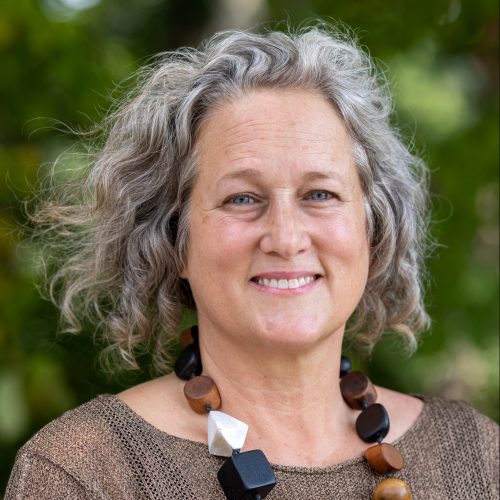
Lena (Michelle) Bettencourt, Ph.D.
Associate Professor of Spanish
Office: 224 Whitesides Hall
Phone: 251-6282
Email: mbettenc@unca.edu