Threat Assessment

See Something, Hear Something, Say Something.
UNC Asheville is committed to maintaining a safe learning, working, and living environment for all individuals on campus. In support of this commitment, we affirm that UNC Asheville will not tolerate violence or threats of violence on its campus or in connection with any University-sponsored program or activity.
The Behavioral Evaluation and Threat Assessment (BETA) Team composed of representatives from the Office of the Dean of Students, University Police, Human Resources, Health and Counseling, Title IX Office, and Housing and Residence Life, meets regularly to evaluate referrals that could pose a danger to the campus community, develop case management plans, and, if necessary, intervene in a manner appropriate to the situation.
The mission of the BETA Team is to determine if an individual poses, or may reasonably be thought to pose, a threat of violence to self, others, or the UNC Asheville community, and to intervene to avert the threat and maintain safety. The BETA Team responds to behaviors exhibited by students, employees, visitors, and non-affiliated persons prior to a critical incident in an attempt to prevent violence and ensure a safe and secure learning, working, and living environment.
Recognizing and reporting early signs of a potentially dangerous situation is crucial to reducing the risk of violence and enhancing the University’s ability to assist community members who may be in distress. We encourage all members of the University community to review the information below to learn how to recognize potential threats and to confidentially report concerns.
In an Emergency
- Get to a safe place.
- Call 911, or University Police at 828.232.5000
- Share your exact location, the phone number you are calling from, the type of emergency that exists, and any other individuals who may be involved.
- If possible, notify others who might also be in danger.
For Non-Emergencies
If you become aware of a situation that you believe may pose a threat to the safety of the campus or one of its members, we encourage you to:
- Call University Police at 828.232.5000
- Email a member of the BETA Team directly
- Contact a member of the BETA Team in person
Melanie Fox
Associate Vice Chancellor for Student Affairs
Dean of Students
Governors Hall
828.251.6465
mrfox@unca.edu
University Police
Weizenblatt Hall
24-Hour Emergency Line: 828.232.5000
For Emergencies Off-Campus, Dial 911
Threat Assessment: Do Your Part
There are many behaviors and circumstances that may indicate an increasing risk for violence, significant disruption to others, or that a person is in need of assistance. The significance of any one behavior or circumstance is often difficult to determine. Therefore, the threat assessment process is designed to review the situation in the context of all of the facts that can be known. Violence, especially that which is targeted toward a specific victim, most commonly stems from the interaction of four factors: subjects, targets, environments, and precipitating events.
If you see suspicious activity, contact University Police at 828.232.5000; in an emergency, call 911. When reporting, describe:
- Who or what you saw
- When you saw it
- Where it occurred
- Why it's suspicious
Individuals who escalate to disruptive or violent action may exhibit certain behaviors or characteristics. Some behaviors are a clear indication of a pending threat, whereas others could be when coupled with other factors and events.
- Attempts or threatens to harm or kill oneself
- Threatens to harm others, either overtly or through more subtle comments or behaviors
- Unexplained increases in absenteeism
- Decreased performance in work or academics
- Resistance to change or reasonable limits
- Over-reaction to changes in policies/procedures
- Extreme or sudden changes in behaviors
- Numerous conflicts with others
- Difficulty learning from past behaviors or experiences
- Displays paranoia or distrust
- Alienates others or isolates oneself from others
- Makes statements indicating approval of the use of violence to resolve a problem
- Identifies with or idolizes persons who have engaged in violence toward others.
- Unclear or inconsistent expectations
- Consistency of travel/movement/patterns
- Denial in the face of a clear threat posed
- Passive orientation to safety
- Ease of access
An environment that facilitates, permits, or does not discourage violence can promote the formation of a threat:
- Chronic unresolved conflict
- High perceived levels of stress
- Toleration of aggressive or hostile interactions
- Perceived distrust or devaluing
- Existence of pecking order or cliques
- Losses, such as:
- Job/Income
- Status
- Significant other/relationship
- Perceived rejection or injustice
- Ostracized by others
- Health problems (e.g., head injuries)
Please note: These are examples of behaviors and circumstances that may serve as indicators of developing concerns. These examples are meant to help you identify potential concerns during your daily interactions with others. These examples are NOT all-inclusive, and this information is not intended to be used as a checklist.
Frequently Asked Questions
Disclaimer: We often get asked what happens to an individual whom you report. Know that, most importantly, the person you are concerned about will receive assistance if you share your concern. The information you provide will be evaluated to determine what action is necessary to address the situation. If necessary, the Team will contact the individual to provide assistance. Only in extenuating circumstances will the Team identify you when talking with the person you are concerned about.
The BETA Team is a group of trained professionals from different departments across campus who discuss and evaluate behaviors of concern that could precede a violent event. This could be violence to self, others, campus, or the UNC Asheville community. The team addresses behaviors of concern and provides resources to help keep the UNC Asheville campus a safe working and learning environment.
UNC Asheville has a BETA Team to allow campus officials from different departments to address concerning behaviors and act quickly to prevent targeted acts of violence.
See our list of members in the Who We Are section of this page.
Most reports come from Housing and Residence Life, University Police, faculty, staff, and the Care Team. The Care Team is a group separate from the BETA Team that is convened by the Dean of Students office. The Care Team is a student assistance team that coordinates a timely response to student emergencies.
Contact Melanie Fox at 828.251.6465, or at mrfox@unca.edu.
Team members have been to many national threat assessment trainings. Topics covered at trainings have included the development of threat assessment teams, legal implications, suicide, mental health/illness, and intercultural communication.
Cases are not managed on a first-come, first-served basis. All cases are triaged and the most imminent cases are managed first. All cases, regardless of the immediacy, will be reviewed and managed in the manner most appropriate for the situation.
Records that are created as part of the BETA Team inquiry are maintained by the Associate Vice Chancellor for Student Affairs or Human Resources, as appropriate.
The BETA Team deals with anyone (student, employee, non-affiliated) who may pose a threat to the UNC Asheville community. The Care Team is a student assistance team designed to aid students with any problems that may arise during their time as a student. While the two Teams are separate entities, a few key administrators serve on both Teams. An incident may first be reviewed on one Team, and then during the discussion, it may become apparent that it should be addressed by the other Team. The case is then moved to the agenda of the other Team for management. As a reporting party (which refers to the person(s) who report(s) to the University that they have been the subject of sex or gender-based discrimination, harassment, or misconduct), you do not need to decide where you should share your concern; once you share your concern, the information will be forwarded to the appropriate Team.
If something happens away from campus that impacts the safety of those involved, please share the concerns with the BETA Team. The Team can work with you and the local police to address the situation. If the situation is an emergency, call 911 immediately for the local police and then notify the UNC Asheville BETA Team.
You matter to the BETA Team because you interact with people on campus and may notice a change in their behavior, which is one of the first indicators that something is wrong and the person needs assistance.
You should share what you know with the Team when you feel the individual needs intervention or assistance. The earlier the Team receives information, the more options we have to assist the person you are concerned about.
Anyone can report concerning behavior, and our Team encourages you to share any information you have. You may not feel like you have all of the information, but you don’t need to. Let our trained Team gather all relevant information and help the person, if needed. The earlier you share your information with us, the more resources we have to assist the person you are concerned about.
After a report is made, the Team will gather information, review the information, and formulate a plan. Depending on the situation, someone from the Team may contact the person you are concerned about. The person will likely identify themselves by their University title and not as a member of “the BETA Team.”
After we receive the initial information, a member of the Team will check with offices across campus to determine if other concerning behaviors are being displayed by the person you are concerned about. The Team will discuss the behaviors of concern and create an action plan to assist the individual, if needed. Some cases will require no further action, and some cases will be referred to a specific office on campus for monitoring or provision of services.
If you provide contact information, someone will contact you to let you know that we received your concern and are reviewing it. If a specific department or office is involved with the situation, they will be notified, as appropriate.
As the reporting party, you can expect that someone will contact you about your concern to see if you have any additional information. Due to the confidentiality of most cases, only some information is likely to be shared with you. But as a reporting party, you serve an important role in the monitoring of the situation because of your interaction with the subject. We would like to have you as an ally in this process to inform us if the management plan with the individual is working. If you have shared a concern and see no change in behavior or continue to be worried about the situation, please contact the Associate Vice Chancellor for Student Affairs at mrfox@unca.edu.
Most importantly, the person you are concerned about will receive assistance if you share your concern. The information you provide will be evaluated to determine what action is necessary to address the situation. If necessary, the Team will contact the individual to provide assistance. Only in extenuating circumstances will the Team identify you when talking with the person you are concerned about.
It may not seem serious to you, but you may only know part of the story. Remember this phrase: “It may be nothing, but…” Your concern may turn out to be nothing, but it also may be something very important. Let our Team decide if the person you know needs assistance. If you share your concern with us, you will not get the person in trouble; you will allow the Team to help them.
No, you do not need to have evidence to share a concern. Oftentimes, if something doesn’t seem right or you have a gut feeling that something is wrong, your concern needs to be shared. The Team will review the situation and act in the best interest of the person.
The Team will review all concerns that are shared. If your concerns turn out to be nothing, nothing will happen to the person, and nothing will happen to you. If you intentionally create a false report, you may be subject to University sanctions.
We try to keep your identity private, but we cannot guarantee that your identity will remain confidential. The Team, in conjunction with University Police, will work with you to ensure your safety throughout the process.
If you provide contact information, we can contact you to let you know we are addressing your concern. You are encouraged to identify yourself because you can assist the Team if clarification or additional information is needed. Anonymous entries will be evaluated based on the information provided. However, providing incomplete information may not allow the individual to receive the help or resources needed.
Who We Are
The BETA Team is a group of trained professionals from different departments across campus who discuss and evaluate behaviors of concern that could precede a violent event. This could be violence to self, others, campus, or the UNC Asheville community. This team addresses behaviors of concern and provides resources to help keep the UNC Asheville campus a safe working and learning environment.

Melanie Fox, Ph.D.
Associate Vice Chancellor for Student Affairs, Chair
Phone: 828.251.6465
Email: mrfox@unca.edu

Vollie Barnwell
Assistant Vice Chancellor for Student Affairs
Office: 270 Governors Hall
Phone: 828.251.6700
Email: vbarnwel@unca.edu

Deborah Shivers
Associate Vice Chancellor & Chief Human Resources Officer
Office: 217 Phillips Hall
Phone: 828.251.6605
Email: dshiver1@unca.edu

Jay Cutspec
Assistant Vice Chancellor for Health & Counseling
Office: 105 W.T. Weaver Building
Phone: 828.251.6668
Email: jcutspec@unca.edu
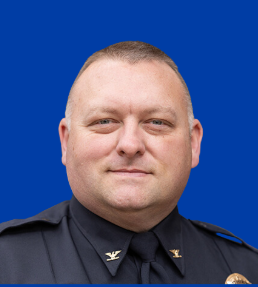

Heather Lindkvist
Assistant Vice Chancellor for Institutional Integrity and Access
Office: 116 Highsmith Union, CPO 1285
Phone: 828-232-5658
Email: hlindkvi@unca.edu


Office of the Dean of Students
Governors Hall
Office Hours: Monday – Friday, 8 a.m. – 5 p.m.
Email: dos@unca.edu
Phone: 828.251.6465