TEXT ONLY
unca logowatch the slideshow
   Printable Strategic Plan Brochure       Contact Us       Related UNC Tomorrow Report   
  • At a Glance
  • Student Outcomes
  • About the Strategic Plan
  • Public Responsibility
  • Liberal Arts Education
  • Long Term Sustainability
  • Progress Report
public responsibility   liberal arts long-term sustainability
Diversity & Inclusion:
Assert and demonstrate our individual and collective responsibility to invite, honor, and learn from our differences, as preparation for an increasingly interconnected world.

Intentionally reflect the vibrant demographics, in all its complexity, of our city, our region, our State, and beyond.

North Carolina:
Attract, retain, and graduate North Carolina students of high academic promise by eliminating financial barriers to participation.

Furnish North Carolina’s economy with highly accomplished thinkers, negotiators, planners, collaborators, and problem-solvers.

Assure that our campus, our region, and our State understand how uniquely positioned we are to define the practical, life-long value of a liberal arts education in the 21st century.

Asheville:
Share responsibility with the greater Asheville community for collaborations on issues of mutual concern, benefit, and accomplishment.

Undergraduate Education:
Serve as the standard of excellence for public liberal arts undergraduate education, emphasizing interdisciplinary learning and exceptional faculty-student mentoring.

Undergraduate Research:
UNC Asheville will be the leading undergraduate research institution for faculty-mentored, student-directed Undergraduate Research. Assure continual stewardship of the Undergraduate Research program and deepen its focus on societal concerns.

The Campus Experience:
Engage all students in a robust campus learning experience based on community responsibility, learning, respect, and service.

MISSION
To Serve as the Standard of Excellence in Public Liberal Arts Undergraduate Education


VISION
Our way of practicing the liberal arts embraces the centrality of learning, rigorous undergraduate research & scholarship, creative expression, exemplary teaching, and an informed commitment to serving our community and to leading our complex world.
Social Sustainability:
Build a respectful, vibrant, responsible and inclusive campus community for everyone that encourages academic, civic, and public engagement.

Invest in the development and success of all students, faculty, and staff members.

Economic Sustainability:
Demonstrate the value of UNC Asheville's distinctiveness within the UNC system so that our optimal size and liberal arts mission are acknowledged and rewarded within the State formula for funding higher education.

Increase private funding to assure the University's ability to fulfill its commitments to generations of students and citizens of North Carolina.

Environmental Sustainability:
Build on our state-wide leadership and recognition for environmental stewardship through continued academic inquiry, energy efficiency, conservation, and green building practices. Pursue creative, respectful, mission-focused campus expansion.

UNC Asheville Students
develop an inquisitive, interdisciplinary, engaged way of life in a vibrant University
community which is just, collaborative and increasingly diverse.

public responsibility

STUDENTS DEMONSTRATE:

» an accountability to their own moral and ethical principles;

» a responsibility to individuals, community and humanity;

» a service orientation, a sense of adventure and respect for differences;

» the joys of entrepreneurship, enlightened risk-taking and responsible activism.


liberal arts

STUDENTS UNDERSTAND:

» the interconnectedness of all disciplines, ideas, actions and individuals;

» the practice of lively engagement with others and the world;

» self, purpose, connection to the world, and their potential for changing it;

» the liberal arts as a habit of heart and mind that they can articulate as a foundation for their lifelong passion for learning and the University that inspired it.


long-term sustainability

STUDENTS DEVELOP:

» the inspiration, skills and discipline to identify individual, community and global needs; » critical thinking and problemsolving skills to address those needs; » courage, inclination and work ethic to develop solutions, work toward them and inspire others to do the same.

» Students identify their unique University experience as something to cherish and support throughout their lives.

About | Architects

About UNC Asheville's Strategic Plan


quotation

Few enterprises are more vital to the viability and vitality of a college campus than the development of a strategic plan. A good plan will identify the campus' foundational tenets as well as its loftiest dreams. It communicates to the world 'who we are' as well as 'who we aspire to be' and 'how we plan to get there.' These statements provide arguably the most critical information that prospective students, as well as prospective faculty, will want to know before deciding whether a college or university is right for them. To fall short on either developing or communicating these identity markers is to risk losing the students and faculty who are most likely to thrive on our campuses. In this highly-competitive market, our campuses can't afford to get this one wrong.

end quotation
  Chancellor Anne Ponder, from her chapter on "Strategic Planning for Branch Campuses" in
S. Schuman (Ed.)  (2009).  Branches: Leading America's Coordinate Campuses.  American Council on Education.


In fall 2006, UNC Asheville, under the leadership of Chancellor Anne Ponder, embarked on a campus-wide strategic planning process. All members of the staff and faculty, along with students, parents, community leaders and the members of our four boards were invited to small-group discussions to offer their advice on "who we aspire to be" and "how we plan to get there." Chancellor Ponder led each session, assisted by a group of 25 faculty, staff, and students -- known as Conveners. Session participants offered ideas and insights, criticism and complaints, and thoughtful visions for a better future.

With all the collected comments in hand, a number of the Conveners began working with the Chancellor on drafting the strategic plan goals in Spring 2007. Over the next six months, the group presented a series of drafts to the campus community and external groups, collected comments, and revised the draft. In late Fall 2007, responsibility for the next steps in the strategic planning process was transferred to the University Planning Council (UPC), the multi-constituent group responsible for campus planning. In the six months that followed, the UPC created detailed implementation strategies, including establishing a timeline, assigning work groups to undertake specific actions, and identifying ways to measure progress over the next five years. The UNC Asheville Board of Trustees officially approved the Strategic Plan in June 2008.

In Fall 2008, 14 work groups responsible for specific actions during 2008-09 began their work. They will report back to UPC, the campus and the Board of Trustees on their progress at least once each year.

For more information on the strategic planning process, see the UNC Asheville Strategic Plan Document Archive.


We will fulfill our PUBLIC RESPONSIBILITY by pursuing the following three goals:

NORTH CAROLINA:

» Attract, retain, and graduate North Carolina students of high academic promise by eliminating financial barriers to participation.

» Furnish North Carolina’s economy with highly accomplished thinkers, negotiators, planners, collaborators, and problem-solvers.

» Assure that our campus, our region, and our State understand how uniquely positioned we are to define the practical, life-long value of a liberal arts education in the 21st century.

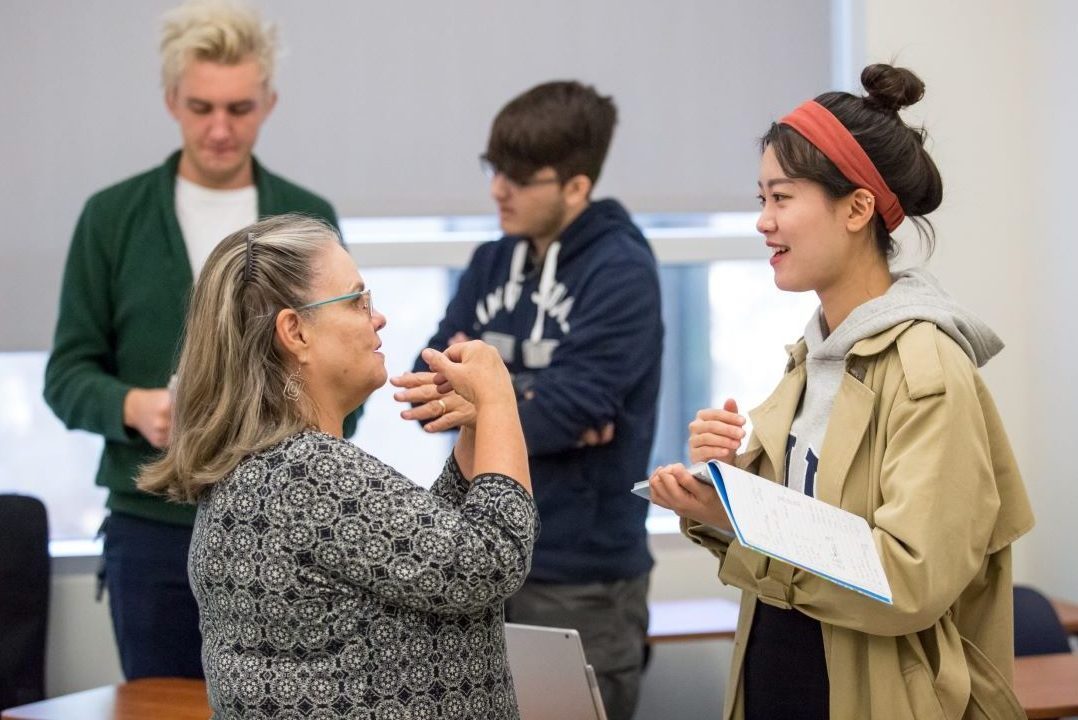
student teacher

GREATER ASHEVILLE:

» Share responsibility with the greater Asheville community for collaborations on issues of mutual concern, benefit, and accomplishment.

DIVERSITY & INCLUSION:

» Assert and demonstrate our individual and collective responsibility to invite, honor, and learn from our differences, as preparation for an increasingly interconnected world.

» Intentionally reflect the vibrant demographics, in all its complexity, of our city, our region, our State, and beyond.

Professor Herman Holt

Related PUBLIC RESPONSIBILITY Components in UNC Tomorrow Report

» Our Global Readiness (4.1)
» Our Citizens and Their Future:
Access to Higher Education (4.2)

» Our Children and Their Future:
Improving Public Education (4.3)

» Our Communities and Their
Economic Transformation (4.4)

» Our Health (4.5)
» Our Environment (4.6)
» Collaboration Among
Institutions (5.7)
We will fulfill our LIBERAL ARTS mission by focusing on the following three goals:

UNDERGRADUATE EDUCATION:

» Serve as the standard of excellence for public liberal arts undergraduate education, emphasizing interdisciplinary learning and exceptional faculty-student mentoring


Deborah Miles


CAMPUS EXPERIENCE:

» Engage all students in a robust campus learning experience based on community responsibility, learning, respect, and service.

UNDERGRADUATE RESEARCH:

» UNC Asheville will be the leading undergraduate research institution for faculty-mentored, student-directed Undergraduate Research.

» Assure continual stewardship of the Undergraduate Research program and deepen its focus on societal concerns.


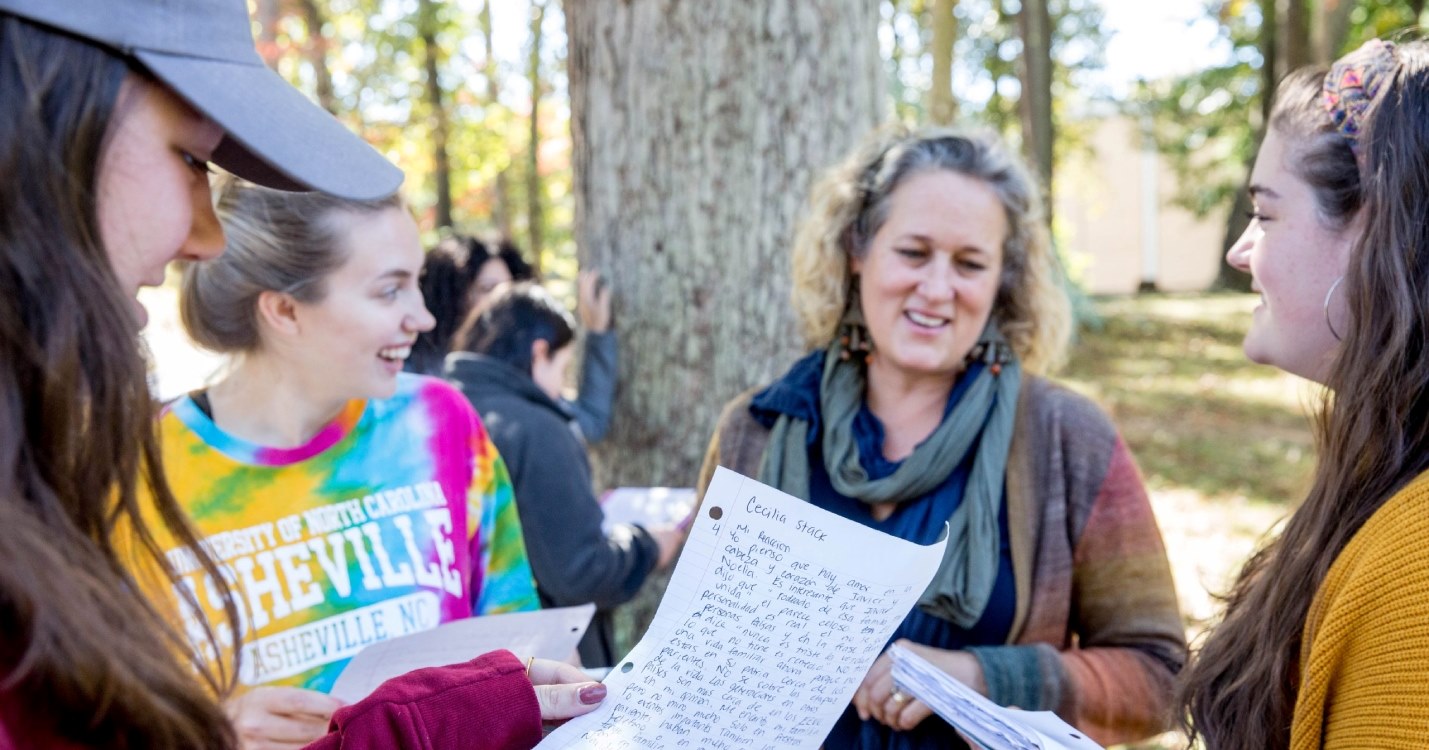
undergraduate research

Related Liberal Arts Education Components in UNC Tomorrow Report

» Our Global Readiness (4.1)
» Access to Higher Education (4.2)
» Our Environment (4.6)
» Our University’s Outreach and Engagement (4.7)
» Refinement and Adjustment
of the Tenure, Promotion, and
Incentive System (5.3)

» Recruit and Retain
High-Quality Faculty (5.4)

» Establish Accountability and Performance Measures (5.8)

 
We will assure our LONG-TERM SUSTAINABILITY by investing in the following three goals:

ECONOMIC SUSTAINABILITY:

» Demonstrate the value of UNC Asheville's distinctiveness within the UNC system so that our optimal size and liberal arts mission are acknowledged and rewarded within the State formula for funding higher education.

» Increase private funding to assure the University's ability to fulfill its commitments to generations of students and citizens of North Carolina.

lab

SOCIAL SUSTAINABILITY:

» Build a respectful, vibrant, responsible and inclusive campus community for everyone that encourages academic, civic, and public engagement.

» Invest in the development and success of all students, faculty, and staff members.

ENVIRONMENTAL SUSTAINABILITY:

» Build on our state-wide leadership and recognition for environmental stewardship through continued academic inquiry, energy efficiency, conservation, and green building practices.

» Pursue creative, respectful, mission-focused campus expansion.


students

Related Economic Sustainability Components in UNC Tomorrow Report

» Our Global Readiness (4.1)
» Our Citizens and Their Future:
Access to Higher Education (4.2)

» Our Children and Their Future:
Improving Public Education (4.3)

» Our Communities and Their
Economic Transformation (4.4)

» Our Health (4.5)
» Our Environment (4.6)

» Recruit and Retain
High-Quality Faculty (5.4)

» Attract and Retain High-Quality
Staff at all Levels (5.5)

» Efficient Use of Resources (5.6)


Our Progress Report
is Under Construction.


 UNC Asheville One University Heights, Asheville, North Carolina 28804 828-251-6600 Comments/Questions