UNC Asheville Millennial Campus Development Advisory Committee Issues Recommendations for Future Development
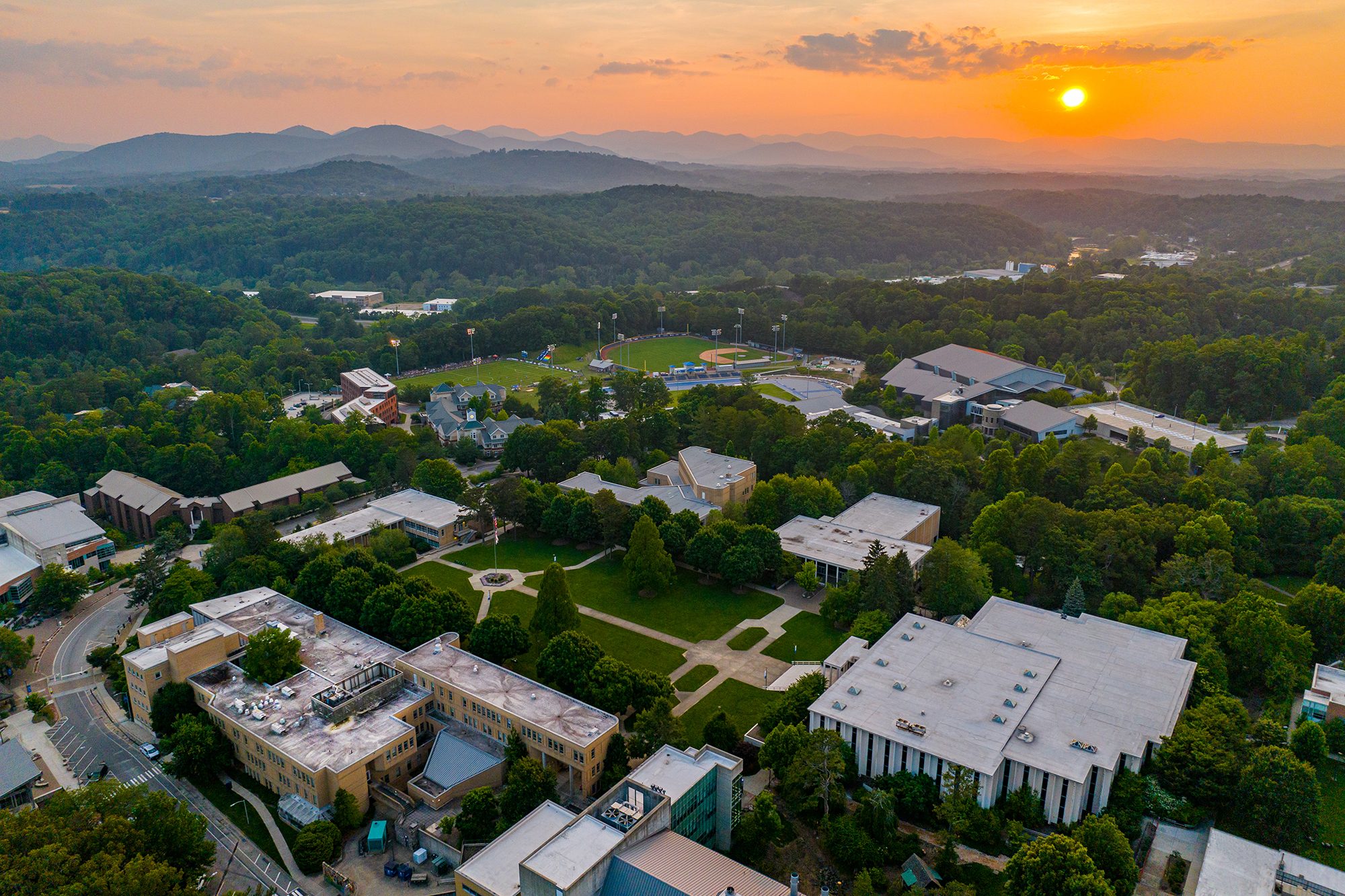
The UNC Asheville Millennial Campus Development Advisory Committee has released its recommendations for the future development of the University's Millennial Campus properties, concluding a five-month planning process that engaged approximately 2,700 stakeholders from across the University and broader community.
ASHEVILLE, N.C. — July 20, 2026 — The UNC Asheville Millennial Campus Development Advisory Committee has released its recommendations for the future development of the University’s Millennial Campus properties, concluding a five-month planning process that engaged approximately 2,700 stakeholders from across the University and broader community.
Established in January 2026 by the UNC Asheville Endowment Fund Board, the 13-member Advisory Committee was charged with developing recommendations to guide future development of the University’s Millennial Campus properties. The Millennial Campus designation, established by the North Carolina General Assembly in 2000, allows UNC System institutions to pursue carefully structured public-private partnerships that support research, teaching, service, economic development, and institutional sustainability.
The Committee’s work focused on evaluating how the University’s Millennial Campus properties could support UNC Asheville’s long-term sustainability while remaining aligned with its academic mission and public purpose. Concepts were evaluated based on their potential to advance financial sustainability, campus livability, mission alignment, community connection, and environmental stewardship.
“The Committee approached this work with a deep appreciation for the significance of these properties and the responsibility entrusted to us,” said Peter Heckman, co-chair of the Advisory Committee. “Throughout the process, we actively engaged in dialogue and conversations with people who care deeply about this University, its students, its environmental resources, and its future. Our recommendations reflect an effort to balance those priorities while creating a path forward that strengthens UNC Asheville for generations to come.”
A Community-Informed Process
Over the course of five months, Committee members met regularly with support from HR&A Advisors, a nationally recognized real estate and economic development consulting firm retained by the University.
The process included stakeholder interviews, community listening sessions, public surveys, environmental and market analysis, reviews of peer institution development models, and evaluations of five independently submitted development concepts.
In total, approximately 2,700 stakeholders participated through multiple engagement channels, including:
- More than 2,600 submissions through a public online feedback form.
- 16 community listening sessions involving University leaders, faculty, students, neighborhood representatives, environmental advocates, business leaders, elected officials, and civic organizations.
- 58 one-on-one and small-group interviews with 61 stakeholders representing higher education, government, nonprofit organizations, business, healthcare, environmental stewardship, arts and culture, and neighborhood groups.
A Site-by-Site Overview
After evaluating all of the University’s Millennial Campus properties, the Committee identified three of those properties for potential development, and found that each offers distinct opportunities to support UNC Asheville’s long-term goals:
- South Campus (25.7 acres of developable property, part of a 45-acre area) — Located at the corner of W.T. Weaver Boulevard and Broadway Street, South Campus emerged as the property with the greatest potential to support future development. Adjacent to the heart of campus and highly visible along the Broadway corridor, the site offers the scale and location needed to support housing, campus-serving amenities, institutional partnerships, and other mission-aligned uses capable of generating recurring revenue for the University.
- Broadway Property (22.1 acres) — Located on the west side of Broadway Street, this property is defined by Reed Creek, the Reed Creek Greenway, and significant natural features. The Committee identified opportunities to strengthen trail connections, support stewardship of natural resources, and reinforce the property’s role as a gateway between campus and Asheville’s broader greenway network while continuing to benefit from existing uses such as Odyssey School.
- Rhoades Property (9.5 acres) — Situated at the intersection of Merrimon Avenue and W.T. Weaver Boulevard, the Rhoades property serves as an important gateway to campus. The Committee noted that development guidelines established through the property’s original conveyance should continue to inform future planning, with any future activity reflecting the site’s unique character and existing restrictions.
Key Recommendations for Future Development
The Committee further recommended that future development:
- Advance five guiding principles: financial sustainability, campus livability, mission alignment, community connection, and environmental stewardship.
- Prioritize student housing, campus-serving amenities, community gathering spaces, and mission-aligned institutional partnerships. Potential uses could include apartment-style student housing, childcare facilities, retail and dining spaces, community gathering areas, and partnerships with educational, research, environmental, or cultural organizations.
- Follow a phased development approach that allows opportunities to be evaluated incrementally rather than through a single large-scale project.
- Treat environmental stewardship and landscape preservation as defining considerations throughout planning and development.
- Exclude a large-scale athletic stadium or performing arts venue from consideration on these three properties, concluding that such facilities would limit opportunities for higher-priority uses more closely aligned with the University’s long-term goals.
- Complete additional visioning, technical studies, market analysis, and partnership development before any developer solicitation or project-specific decisions move forward.
Looking Ahead
With the UNC Asheville Endowment Fund Board’s approval, the recommendations will now serve as a framework for the University’s next phase of planning. Over the next 12 months, University leadership will refine the vision through additional technical studies, market analysis, and exploration of potential partnerships, followed by project-specific decisions and a developer solicitation.
“This report is not an endpoint,” Heckman said. “It’s a roadmap. The recommendations establish a framework for future decisions, and UNC Asheville’s work of translating those principles into projects that serve the University and community will continue in the months and years ahead.”
The full report, The Path Forward: Recommendations for UNC Asheville’s Millennial Campus Development, is available at unca.edu/millennial-campus.
About UNC Asheville
UNC Asheville is North Carolina’s public liberal arts and sciences university of the future, marked by technology-driven solutions, hands-on learning, a student-centered focus and career and professional readiness. With award-winning faculty, small class sizes, and 60+ academic programs, including a dual degree in Engineering/Mechatronics with NC State, the University provides free tuition and fees through its Access Asheville program as well as merit scholarships to all first-year students. In the US News & World Report 2026 edition of Best Colleges, UNC Asheville is ranked No. #10 in Top Public Schools, and No. #12 in Princeton Review’s 2026 Top 50 Guide to Green Colleges. Known as the Bulldogs, UNC Asheville student-athletes compete in 16 NCAA Division I Teams in the Big South Conference. For more information, please visit: unca.edu.
Ready for What's Next?
At the University of North Carolina Asheville, you’ll experience an unparalleled liberal arts and sciences education. Take the next step and apply to become a Bulldog!