Kevin Riordan, Ph.D.

Kevin Riordan, Ph.D.
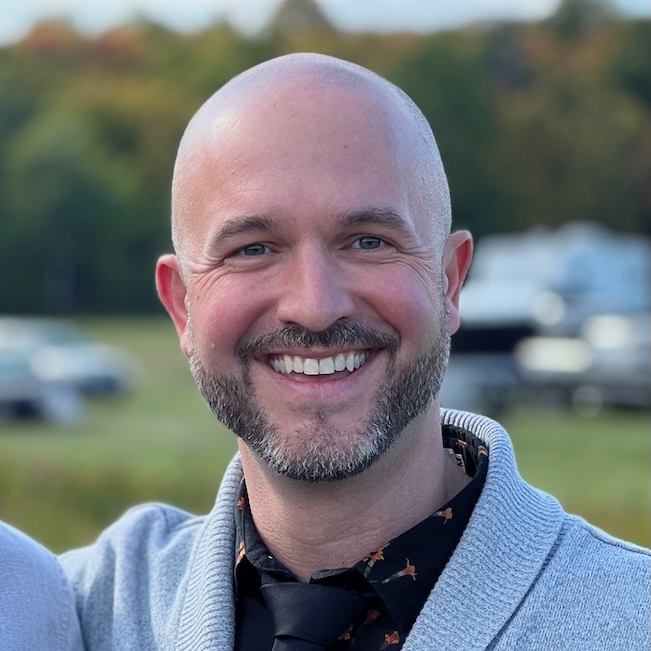
Assistant Professor of Psychology
220 Delany Hall
Phone: (828) 250-3948
Email: kriordan@unca.edu
Current Office Hours:
Wednesdays and Fridays, 12:45–1:45 p.m., or by appointment
Education
B.A., Evergreen State College (Liberal Arts & Sciences)
Ph.D., University of Wisconsin–Madison (Counseling Psychology)
Research and Professional Interests
- Contemplative science and meditation-based interventions
- Mobile health and digital interventions
- Psychotherapy process and outcomes
- Clinical training, supervision, and professional development
- Task-sharing and community-based models of mental health care
Biography
Kevin Riordan, PhD earned his doctorate in Counseling Psychology from the University of Wisconsin–Madison, where he also trained as a contemplative scientist at the Center for Healthy Minds. In the classroom, he aims to make psychological science exciting and relevant to students’ real-world experiences while fostering curiosity and self-confidence. Dr. Riordan has a special interest in working with nontraditional and transfer students, and he selectively mentors students wanting research experience.
Dr. Riordan’s research is driven by a commitment to mental health equity through improving both the quality and accessibility of mental health interventions. His work focuses on empirically supported methods to promote psychological well-being at the population level, such as through meditation training, scalable digital technology, and community-based prevention models. Increasingly, his work also focuses on using naturalistic psychotherapy data to help understand and improve psychotherapy outcomes and clinical training.
As a practicing psychologist, Dr. Riordan’s clinical background spans more than 10 years. He has trained in residential and inpatient treatment, college counseling, primary care mental health integration, and mandated care for incarcerated individuals with serious mental illness. His clinical work emphasizes research-supported treatments such as Acceptance and Commitment Therapy (ACT) and Cognitive Behavioral Therapy (CBT), and he has substantial experience providing affirming care for clients from marginalized backgrounds. Dr. Riordan is trained as a generalist, though he has specialty in serious mental illness and anxiety disorders, and finds it especially meaningful to work with neurodiverse clients, young men, and people with disabilities.
Before graduate school, Dr. Riordan had an eclectic background working in nonprofit organizations, international development, outdoor education, and residential mental healthcare. He is also a long-term meditator and completed a yearlong silent retreat at a Zen monastery. Outside of work, he enjoys hiking, canoeing, paragliding, and practicing Brazilian Portuguese with his wife, who is also a psychologist.
Selected Publications
Beloborodova, P., Smith, L. M., Riordan, K. M., Simonsson, O., Dottori, L. T., Song, H. Q.,
Shashko, N. S., Tatar, R., Baldwin, S. A., Bernstein, A., Dunne, J. D., Davidson, R. J.,
Hirshberg, M. J., & Goldberg, S. B. (2026). Prevalence and predictors of self-reported
adverse experiences in digital meditation training: 2 randomized controlled trials. JMIR
Mental Health, 13(1), e90602. https://doi.org/10.2196/90602
Jiwani, Z.*, Xie, Q.*, Curtin, J. J., Riordan, K. M., Babins-Wagner, R., Caperton, D., Thompson,
M., & Goldberg, S. B. (2025). Is employment status associated with baseline symptoms,
engagement, and outcomes in naturalistic psychotherapy? Evaluation in a large
community mental health agency. Psychotherapy. (*Indicates shared first authorship).
https://doi.org/10.1037/pst0000597
Xie, Q., Riordan, K. M., Baldwin, S. A., Simonsson, O., Hirshberg, M. J., Dahl, C. J., Nahum-
Shani, I, Davidson, R. J., & Goldberg, S. B. (2024). Is informal practice associated with
outcomes in loving-kindness and compassion training? Evidence from pre-post and daily
diary assessments. Behaviour Research and Therapy, 177, 104537.
https://doi.org/10.1016/j.brat.2024.104537
Riordan, K. M., Simonsson, O., Frye, C., Vack, N. J., Sachs, J., Fitch, D., Goldman, R. I.,
Chiang, E. S., Dahl, C. J., Davidson, R. J., & Goldberg, S. B. (2024). How often should I
meditate? A randomized trial examining the role of meditation frequency when total
amount of meditation is held constant. Journal of Counseling Psychology 71(2), 104.
https://doi.org/10.1037/cou0000725
Lam, S., Riordan, K. M., Simonsson O., Davidson, R. J., & Goldberg, S. B. (2022). Who sticks
with meditation? Rates and predictors of persistence in a population-based sample in the
United States. Mindfulness, 14(1), 66-78. https://doi.org/10.1007/s12671-022-02061-9
Riordan, K. M., MacCoon, D., Barrett, B., Rosenkranz, M., Chungyalpa, D., Lam, S. U.,
Davidson, R. J., Goldberg, S. B. (2022). Does meditation training impact environmental
attitudes, environmental behaviors, and sustainable well-being? Results from a cross-
sectional comparison and a randomized controlled trial. Journal of Environmental
Psychology, 84, 101900. https://doi.org/10.1016/j.jenvp.2022.101900
Goldberg, S. B., Riordan, K. M., Sun, S., & Davidson, R. J. (2021). The empirical status of
mindfulness-based interventions: a systematic review of 44 meta-analyses of randomized
controlled trials. Perspectives on Psychological Science, 17(1), 108-130.
https://doi.org/10.1177/1745691620968771
A full list of Dr. Riordan’s publications can be found here:
https://scholar.google.com/citations?hl=en&user=sZo0DroAAAAJ
Ready for What's Next?
At the University of North Carolina Asheville, you’ll experience an unparalleled liberal arts and sciences education. Take the next step and apply to become a Bulldog!